These projects were created as part of a university video essay class, and really mark a period of experimentation and growth for me. I worked with techniques like epigraphs, supercuts, voiceover, and multiscreen editing, learning how different approaches to structure and editing can change the way something feels or is understood. Looking at the work of creators like Catherine Grant, Kevin B. Lee, and kogonada also helped shape how I think about video as both a creative and critical medium.
Condition of the Observer: Interstellar Epigraph
Creator Statement
In The Fourth Dimension, Charles Hinton explores higher-dimensional space not only as a mathematical concept but as a problem of perception. I was particularly drawn to his application of Immanuel Kant’s theory of experience, where Hinton uses the example of the motion of celestial bodies to communicate the idea that what we perceive as universal truths may in reality be due “to the condition of the observer” (Hinton, 107) rather than the condition of the bodies themselves. He suggests that understanding the fourth dimension requires us to first observe how we understand anything at all. Through Kant, he urges us to consider the possibility that space itself is not an objective feature of the universe but rather something that arises from our experience of reality. From my understanding of this perspective, the limits of spatial understanding are not those of knowledge but rather the limits of our perception.
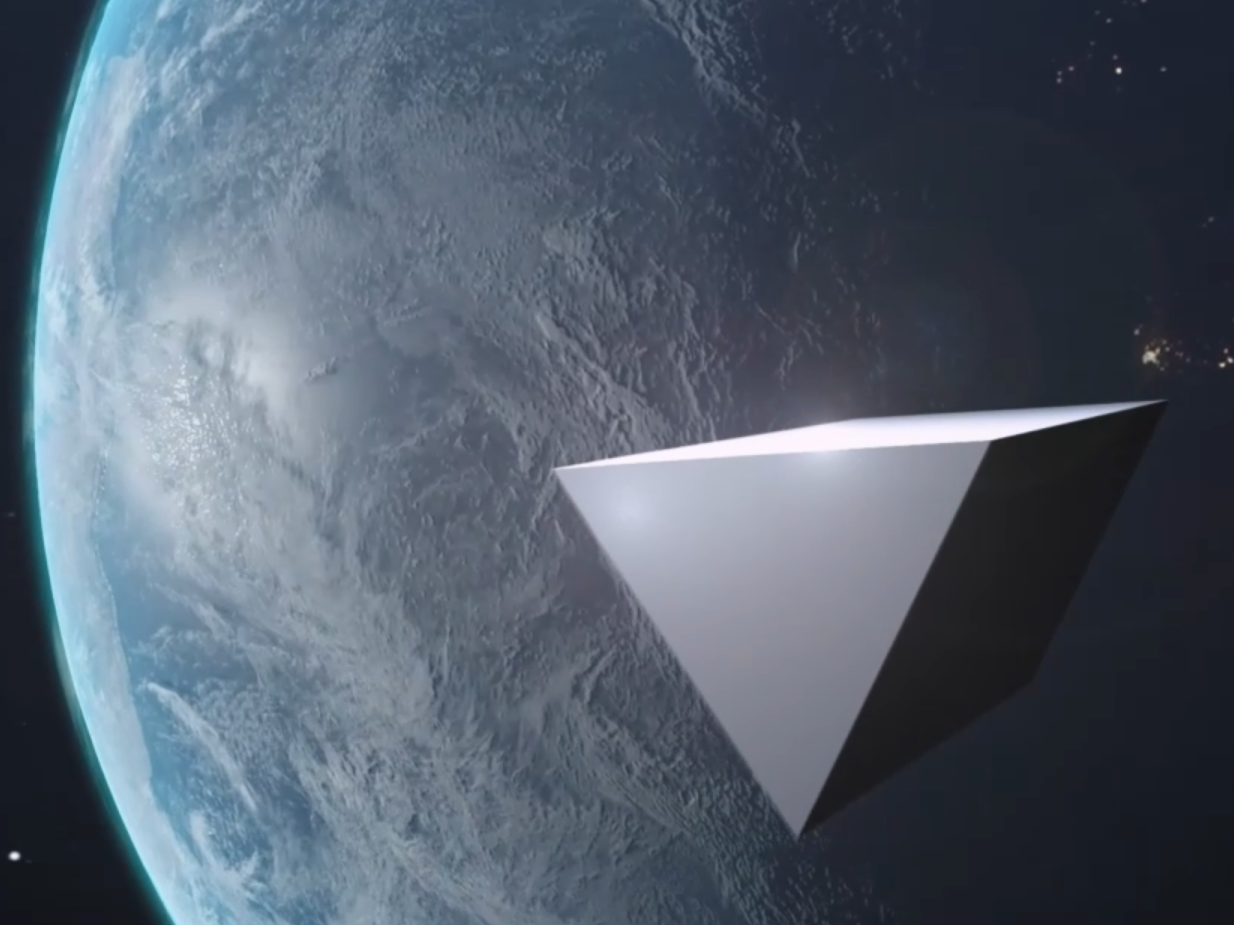
I feel that the idea that one's understanding being shaped by their condition or perspective resonates strongly with what we have been exploring on haptic visuality within video essays, where meaning can be found not only through clear representation but also through sensation, distortion, and partial perception. This, along with Hinton’s work, solidified the scene from Interstellar I had hoped to explore, and guided the editing choices I made in this epigraph. The scene itself is a fantastic visual representation of how the fourth dimension might be experienced, and through my editing, I aimed to further convey the ideas of dimensionality and limits of perception.
I chose to limit myself to only three effects to communicate these ideas and add texture to my work: prism blur, JPEG damage, and mosaic blur. The prism blur breaks down clear spatial boundaries, while adding a somewhat soft, corporeal feeling to the imagery, while the gradual introduction of JPEG damage onto the footage, and mosaic blur onto the typography, erodes clarity and color until the image dissolves into white noise or into the background, symbolizing the threshold of our perception, and how our understanding of what we see erodes when we view it from a perspective that is beyond our limit.
My choice in music was out of necessity, as I wanted the meaning to be more focused on the visuals and the writing itself, so I decided to include “Unseen Realm” by Moments (soundstripe.com), as it is a piece that felt cohesive with the pacing and intended feeling of the video, and the title was a perfect fit.
References
Hinton, Charles Howard. The Fourth Dimension. Swan Sonnenschein & Co., 1906. Project Gutenberg, https://www.gutenberg.org/cache/epub/67153/pg67153-images.html , accessed 2026/02/04
Nolan, Christopher. Interstellar. Paramount Pictures and Warner Bros. Pictures, 2014.
Moments. Unseen Realm. Soundstripe, https://app.soundstripe.com/songs/17375, accessed 2026/02/06
I attest that this project did not use AI tools at any stage of its development or in creating any of its components.